What student mentoring at Data Centre World taught us about our data center industry



More compute power means more data centers – and more people to design, build, and run them. The industry’s biggest constraint isn’t only CapEx or kilowatts; it’s talent too. If young people don’t know what a data center is or does, how do we attract them into the talent pipeline?
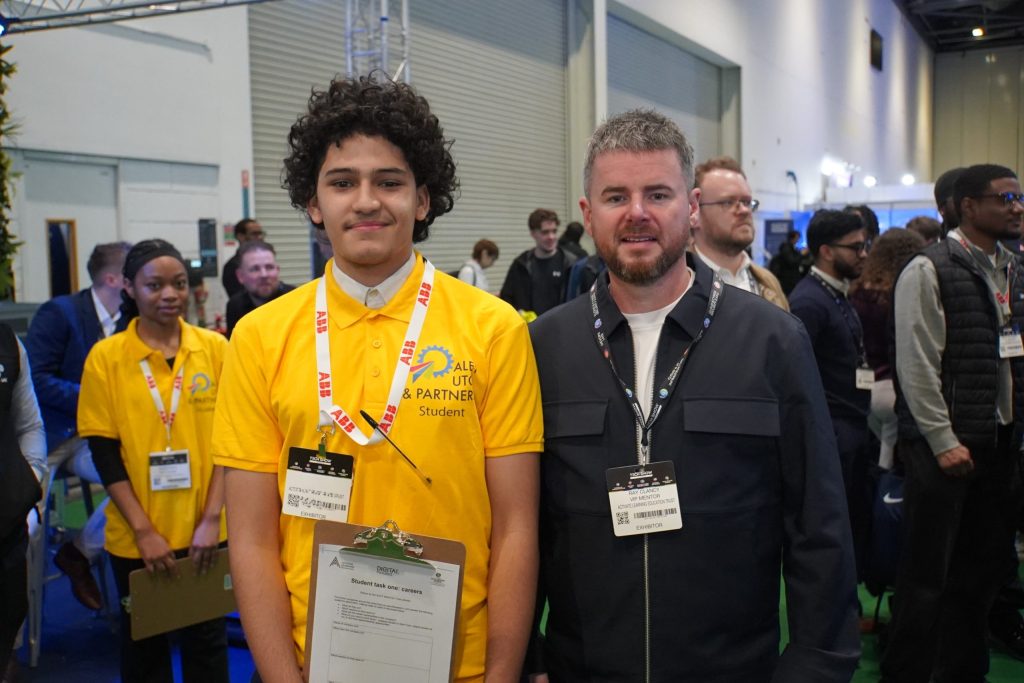
In March 2026, four of our Yondr-ites, Louise Donkor, Romy van Wezel, Ray Clancy and Gavin Robertson mentored four students on the Digital Futures Programme a course created to help students develop the skills and knowledge needed to prepare for a career in the digital industries. They spent the day mentoring the students at Data Centre World – the largest data center event in the world.
Here’s what fresh eyes revealed about our industry, and what data center industry leaders can do to help build the next generation of industry talent.
Setting up our students for success
Our mentors met their students at the Active Learning Education Trust stand where they were briefed on mentoring and guiding the students throughout the day.
While the mentees had varying levels of confidence and prior data center knowledge, none had attended such a large exhibition before. Each mentor flexed their approach: hands-on when reassurance was needed, hands-off when a student was ready to lead.
“My student was very impressive and carried himself exceptionally well. He engaged respectfully and listened carefully.” Ray Clancy, Director of Service Delivery – EMEA
What fresh eyes showed us – four learning curves from the day
1 – Industry literacy accelerates confidence
Students were captivated by the details we sometimes take for granted. Like the end-to-end journey of data: from a personal device to cloud to rack-level storage – and the power and cooling that make it work.
Ray noted that, as his student connected the data flow dots: “he became more confident and began asking deeper engineering-related questions.”
2 – Career opportunity is broader than students expect
Students often arrive with a single career lane in mind. Mentoring shows how disciplines translate – mechanical, electrical, controls, civils, cybersecurity, operations, and more – and lets students know that making one career choice doesn’t mean you stay in that lane forever. Adjacent roles can keep students close to what they love while opening more doors.
3 – Skills really are transferable
We need to say this louder, sooner, and more often. The overlap with aerospace, manufacturing, utilities, oil and gas, semiconductors and telecoms is real. Systems thinking, safety culture, quality control, reliability engineering, and problem-solving are universal currencies.
“My student expressed an interest in pursuing Aviation Engineering. I explained that the data center industry shares many engineering principles and competencies with aviation and encouraged him to keep an open mind when considering opportunities outside the aviation sector.” Ray Clancy, Director of Service Delivery – EMEA
4 – Soft skills are not ‘nice-to-have’
Networking, conversation frameworks, and basic etiquette matter. As Romy van Wezel, Workplace Services & Travel Manager at Yondr shared: “My student went straight to the first supplier and asked for their name without any formal greeting. After I gave some guidance on how to approach a conversation, they improved right away. And the rest ran smoothly.”
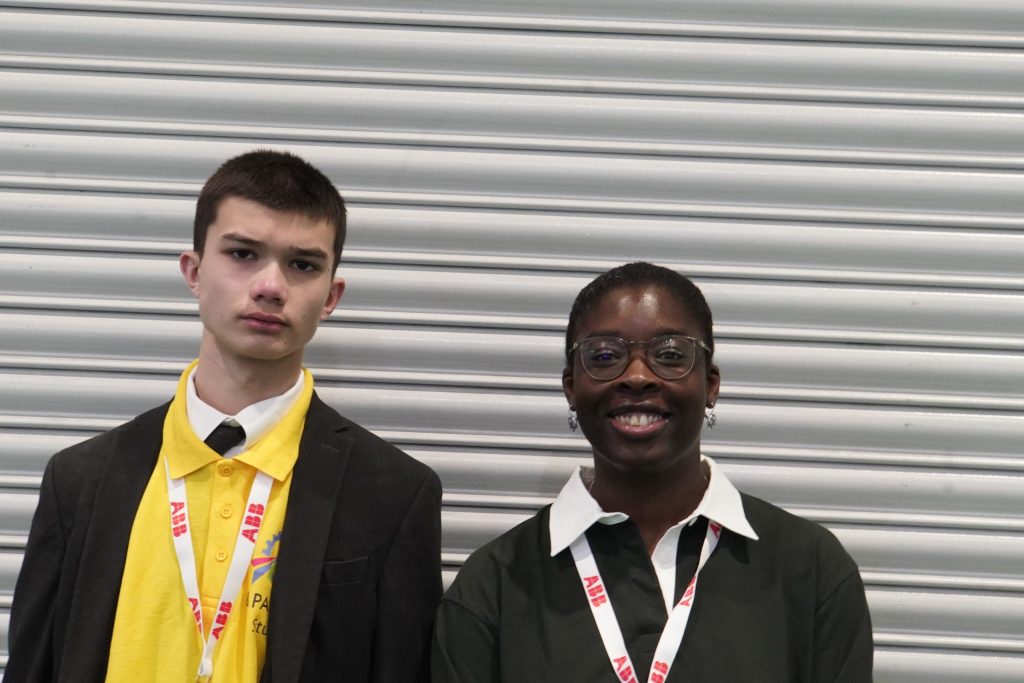
“Once my student gained some confidence and started speaking to the exhibitors, he asked insightful and interesting questions, despite his quiet demeanour!” Louise Donkor, Marketing Communications Director
The questions that surprised us and why they matter
“Where do I even start?”
For many young people, industry conferences are overwhelming or simply not their thing. By mentoring students at events like Data Center World, industry leaders can help young people find their feet and make the most of the opportunities on the day.

“My student mentee was already quite confident but the size of the show, the amount of suppliers and crowd was quite overwhelming. I noticed that having me at his side made my student feel more at ease.” Romy van Wezel, Workplace Services & Travel Manager
Our mentors helped their students curate vendor lists and explained how to do this pre-work before other events. Ray suggested a “choose five and explain why” method to focus learning and make the show floor less overwhelming.
What students see that insiders sometimes miss
We still have an awareness gap
As Gavin Robertson, Commercial Director – EMEA noted, there’s “very limited knowledge” of the data center industry outside of it. If we want a bigger talent funnel, we must keep telling the story: what DCs power, who makes them possible, and why it matters.
The engineering draw is strong
Once students grasp the systems picture, curiosity spikes. That’s one way to spark interest and engagement and provides a pathway to connect young people with practitioners. “During the visit, I introduced my student to former colleagues,” Ray said. “I asked them to share their career journeys, the challenges they encountered, and the lessons they learned. Their advice was consistent: remain flexible, maintain a can-do attitude, and treat everyone with respect.”

“Making one career choice doesn’t mean you stay in that lane forever. I mentioned that even if her preferred path did not work out the opportunities are endless, there are still exciting opportunities beyond her main interests that would allow her to remain connected to work she enjoys.” Gavin Robertson, Commercial Director – EMEA
Key takeaways for data center leaders
Following our thought-provoking day of mentorship, we know there’s more our industry could be doing to encourage talent to our sector:
1. Make the breadth of our industry visible
Data center businesses offer a huge array of roles across dozens of disciplines. Package and promote that breadth earlier in the education journey.
2. Teach transferability
Explain how skills transfer from adjacent sectors. We need to say this clearly, show examples, and back it up with hiring practices.
3. Invest time with future talent
Exhibitors were generous with students. A little time from industry leaders goes a long way in sparking interest and shaping career choices.
4. Soft skills move careers
Communication and relationship-building open doors as surely as technical competence. Include these skills in programmes, assessments, and feedback loops.
Remove the mystery, reveal the mission
When students see the mission – keeping the digital world resilient, efficient, and sustainable – their eyes light up. And when they meet the people who make it real, inspiration sticks.
Our industry should keep opening the doors, building skills, and connecting future talent to meaningful work inside the data center ecosystem. How will you help build the data center sector’s talent pipeline?

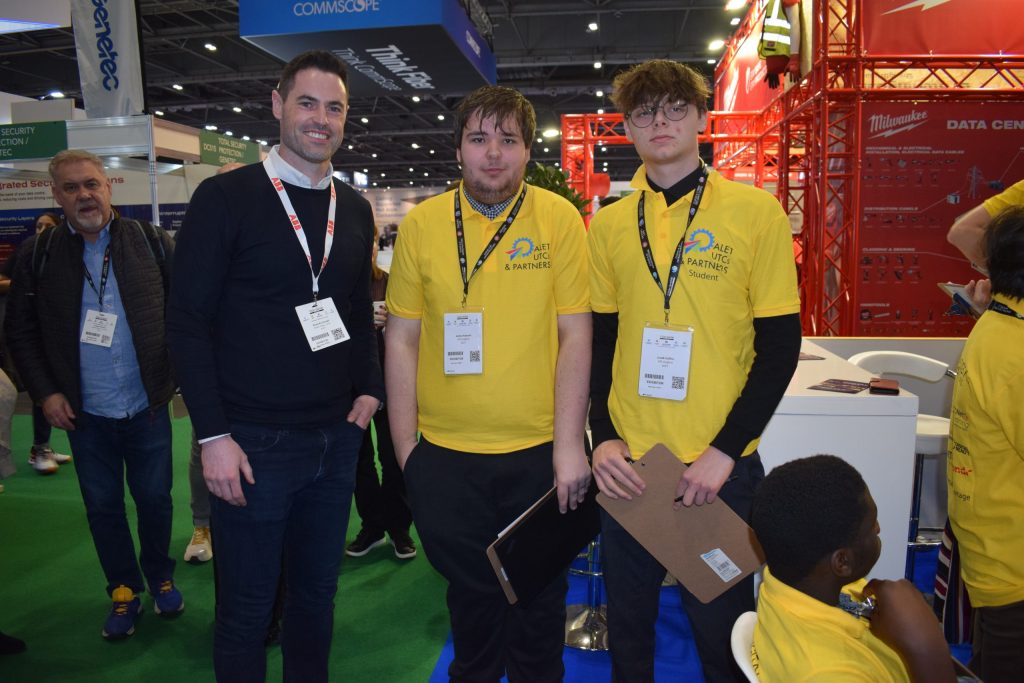
Yondr mentors UTC students at Data Center World conference
World Mental Health Day
Setting sail: The astonishing skill and strength of character needed to compete in a solo race around the world

I’m living proof that mentorship matters in the data center industry